Tutorial: Forehand Throw (Sidearm) in Disc Golf
The forehand throw (also called a sidearm or flick) is one of the most useful shots in disc golf. It’s great for tight gaps, low ceilings, scramble shots, and controlled lines that finish to the right for a right-handed player.
What Is a Forehand Throw in Disc Golf?
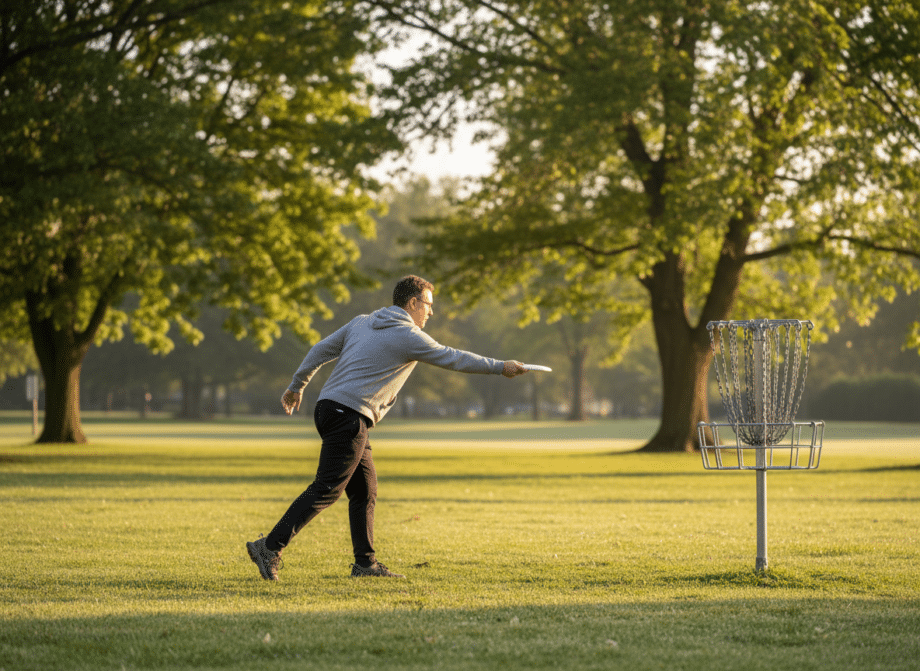
A forehand throw is a disc golf technique where you release the disc from the side of your body using a wrist “flick” motion (similar to skipping a stone). A clean forehand relies on good grip pressure, a compact swing, and lots of spin.
Forehand flight path (right-handed vs left-handed)
- Right-handed forehand (RHFH): typically finishes right at the end of the flight (fade).
- Left-handed forehand (LHFH): typically finishes left at the end of the flight.
How to Throw a Forehand: Step-by-Step
1) Forehand grip (two-finger stacked grip)
- Place your middle finger inside the rim, pressed firmly against the inside edge.
- Stack your index finger on top of the middle finger (also inside the rim).
- Put your thumb on top of the flight plate to clamp the disc securely.
- Keep your wrist firm—think “handshake grip,” not floppy.
Beginner option: split grip
If stacked feels awkward, try a split grip (index and middle finger side-by-side). Many beginners find it easier at first, then switch to stacked later for cleaner releases.
2) Stance and setup
- Stand slightly sideways to your target (athletic stance).
- Keep the disc near your throwing-side hip.
- Bend your knees slightly and stay balanced.
3) Reach back (keep it compact)
- Use a small, controlled reach-back—don’t swing the disc far behind you.
- Forehand power comes from timing + wrist snap, not a huge backswing.
4) Lead with the elbow
- Drive your elbow forward first.
- Keep the disc close to your body for better accuracy and less wobble.
5) Snap the wrist (the “flick”)
- At the last moment, snap your wrist forward.
- Your fingers should “pop” off the rim, creating spin.
Key idea: More clean spin usually means a more stable, straighter flight.
6) Release angle (start flat)
Start by learning a flat forehand release:
- Disc level with the ground
- Palm facing slightly up/out
- Clean, smooth release at 50–70% power
Once you can throw flat, try these angles
- Hyzer forehand: outside edge tilted down (often more consistent and predictable).
- Anhyzer forehand: outside edge tilted up (can create a “flex” line that fights back).
7) Follow-through
- Let your arm continue forward naturally.
- Finish with your hand pointing toward the target.
A smooth follow-through usually means you released the disc cleanly.
How to Fix Forehand Wobble (Off-Axis Torque)
The most common beginner issue with a forehand throw is wobble (often called off-axis torque). If your disc comes out shaky or fluttery, it’s usually caused by one of these:
- Rolling your wrist over during release
- Arm swinging wide instead of leading with the elbow
- Loose grip that lets the disc slip early
Quick fixes that work fast
- Throw at 50–70% power until the release is clean.
- Keep the disc close to your body.
- Focus on a flat release and clean spin.
Best Discs for Learning a Forehand Throw
Choosing the right disc can make learning forehand much easier—especially for beginners and slower arm speeds. For clean releases and confidence-building flights, start with beginner-friendly molds from Divergent Discs.
Good disc types to start with
- Putters and approach discs: great for learning clean form (they reveal wobble quickly). Browse Divergent Discs putters.
- Understable fairway drivers (like the Tiyanak): great for smoother forehands, lower power, and shaping right-turning lines—just keep the release clean to avoid it turning too much. Learn more: Tiyanak Fairway Driver.
Tip for beginners
If you’re newer to disc golf, start with a disc that feels comfortable in your hand and focus on control first. Distance comes later.
10-Minute Forehand Practice Drill (Beginner-Friendly)
- Stand about 50–100 feet from a target.
- Throw 10 smooth forehands at ~60% power.
- Only focus on:
- Elbow leading
- Flat release
- Clean spin (minimal wobble)
- Step back only when your throws come out clean and consistent.
Forehand vs Backhand: When Should You Use Forehand?
You’ll want both throws in your game, but the forehand is especially useful when:
- You need a right-finishing shot (RHFH).
- You’re scrambling around obstacles and need a quick line.
- You want a low, controlled shot (and sometimes a skip, depending on the disc and ground).
Do you need a run-up?
No. Learn the forehand from a standstill first. Clean mechanics beat speed every time.
Wrap-Up: Build a Smooth, Reliable Forehand
The best forehand throw is compact, smooth, and spin-heavy—not forced. Start slow, keep the disc close, lead with the elbow, and prioritize a clean release. Once the wobble disappears, your accuracy and distance will climb naturally.