Dealing with Different Terrain in Disc Golf (Grass, Woods, Hills, Rocks, and More)
One of the best (and most frustrating) parts of disc golf is that every course plays a little different. A wide-open park course is not the same game as a tight wooded track, and a dry summer fairway can feel totally different after a rainy week.
In this guide, we’ll break down how to adjust your throws, footing, and disc choices for common types of terrain—so you can play smarter, stay safer, and keep your discs in better shape.
Why terrain matters (more than most beginners realize)
Terrain affects:
- Footing and balance (your plant foot matters a lot)
- How your disc skips, slides, or sticks after landing
- Shot selection (sometimes the “best” line is the safest line)
- Disc wear and tear (rocks and gravel can chew up plastic fast)
If you’re newer to the sport, terrain can make it feel like your discs are “random.” The good news: most of it is predictable once you know what to look for.
1) Short grass vs. thick grass: controlling ground play
Short grass (mowed fairways)
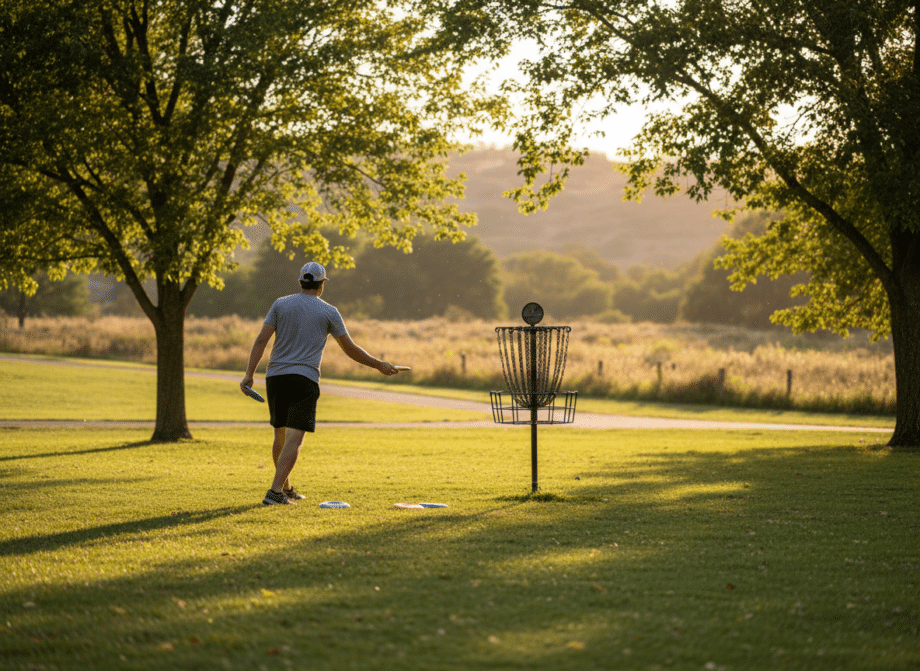
Short grass tends to create more skips and slides, especially on faster throws and flatter landings.
Tips for short grass
- Land softer: Aim for a slightly higher, slower shot that “settles” instead of knifing into the ground.
- Add a touch of hyzer (a gentle angled release): This can help the disc land on an edge and slow down sooner.
- Club down: If you keep going long, try a slower disc and focus on clean form.
If you want a beginner-friendly disc that can help you shape controlled flights without needing pro-level power, check out our disc lineup and pick something that matches your arm speed.
Thick grass (rough, weeds, or tall field grass)
Thick grass usually reduces skips—great for stopping near the basket—but it can also hide discs quickly.
Tips for thick grass
- Throw a little higher so you can track the flight longer.
- Use brighter colors when possible (it really helps in tall rough).
- Play for the fairway: A safe shot in the short grass often beats a “hero line” into tall weeds.
2) Woods and roots: accuracy, scramble shots, and safer footing
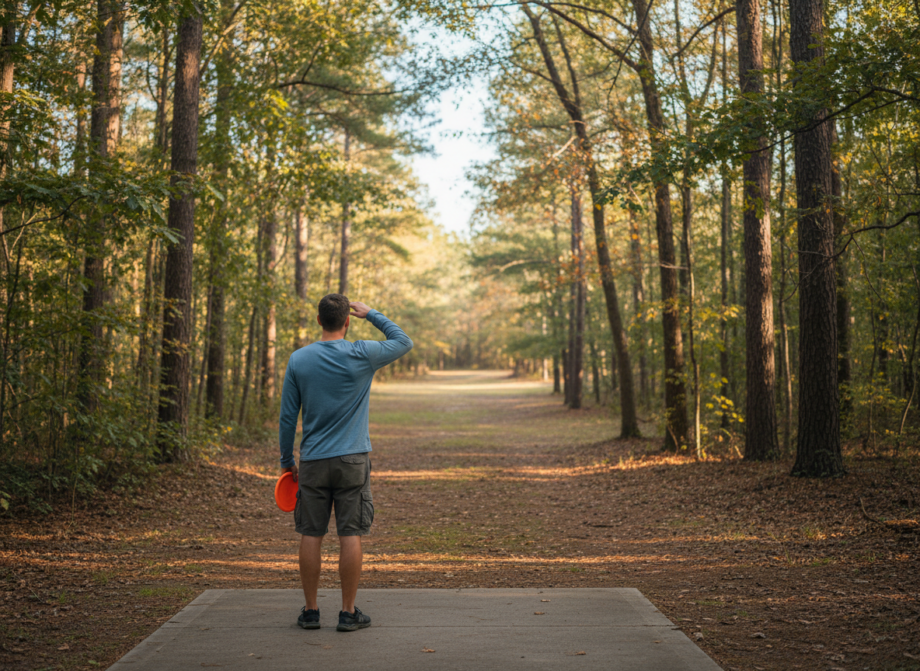
Wooded courses are where disc golf becomes a placement game. You don’t need huge distance—you need control.
Tips for wooded terrain
- Shorten your run-up: A simple one-step (or standstill) throw improves balance and accuracy.
- Aim smaller: Pick a specific “window” between trees instead of aiming at the general fairway.
- Expect weird ground action: Roots can cause unpredictable rollaways, so plan for a safer landing zone.
For tight fairways, many players like a controllable midrange or fairway driver that holds a clean line without needing max power. Browse our discs and look for options that feel comfortable in the hand and fly straight for your speed.
3) Hills and slopes: avoiding rollaways and staying in control
Hilly courses are fun—but they can punish small mistakes. A putt that hits and rolls can turn into a 30-foot comeback putt fast.
Uphill shots
- Disc up: Uphill plays shorter, so you may need a slightly faster disc or a little more height.
- Keep your chest up: Many players accidentally throw nose-up too much uphill, causing early stalls.
- Focus on balance: If your footing is unstable, reduce the run-up.
Downhill shots
- Disc down: Downhill plays longer, so a slower disc often goes plenty far.
- Throw smoother: Big power isn’t necessary—clean release matters more.
- Plan for the landing: A fast, flat landing can skip and roll far downhill.
Rollaway prevention (simple and effective)
- Aim to land flatter and softer when possible.
- Avoid landing on edge on steep slopes (that’s how rollaways start).
- Lay up smart: Sometimes the best play is a stress-free putt range instead of running a risky long putt.
If you’re building a beginner-friendly bag that helps reduce wild skips and rollaways, start here: shop Divergent Discs.
4) Rocks, gravel, and hardpan: protecting your discs (and your score)
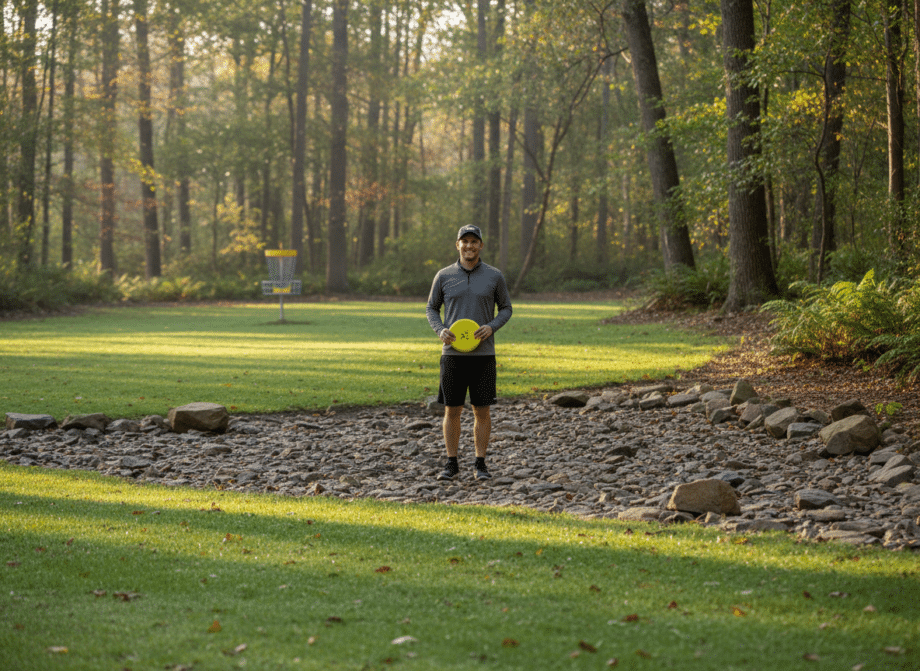
Rocky terrain can be brutal on plastic. It can also create big skips—especially with drivers landing fast and flat.
Tips for rocky or hard ground
- Choose safer landing angles: A little extra height and a softer landing can reduce damage and unpredictable skips.
- Don’t force max power: Smooth throws often land cleaner and skip less.
- Expect extra ground play: Plan for a longer finish after the first bounce.
If you play a lot of rocky courses, it can be worth having a “workhorse” disc you don’t mind scuffing up. Explore our disc collection to find a dependable option for your local terrain.
5) Mud, wet grass, and rain: staying safe and consistent
Wet conditions change everything: your grip, your footing, and how the disc reacts when it hits the ground.
Wet-weather basics
- Slow down your run-up to avoid slipping.
- Prioritize clean releases: Wet grip can cause early slips or nose-up throws.
- Play for the center: In rain, safe lines usually beat aggressive lines.
And remember: a clean, controlled round in bad weather can beat a “hero” round that turns into constant scrambling.
6) Sand and loose dirt: stability and footing first
Loose footing makes it harder to transfer power. If you try to throw at 100% on sand, you’ll often lose balance and accuracy.
Tips for sand/loose dirt
- Use a standstill or one-step throw for better control.
- Focus on smooth form instead of power.
- Pick the simplest line: Accuracy wins on unstable footing.
Quick terrain checklist (use this before you throw)
- Is my footing stable enough for a run-up?
- Will this ground cause big skips or rollaways?
- Should I throw higher/softer to reduce ground play?
- Is the safe shot better than the perfect shot?
Final thoughts: play the course you have
Terrain is part of the game. The more you adjust to it—rather than fighting it—the more consistent (and confident) you’ll become.
If you’re looking for beginner-friendly discs designed for real-world recreational play, take a look at our full lineup here: Divergent Discs Collection.