
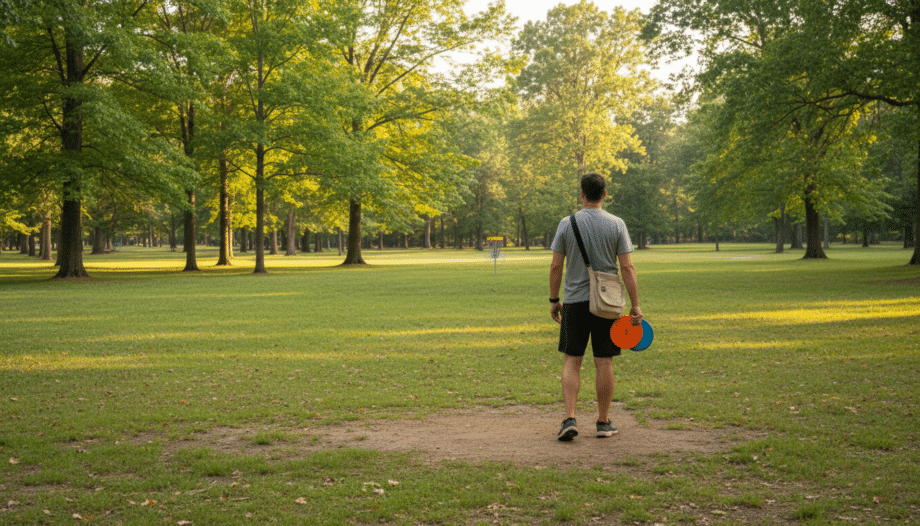
Beginner Disc Golf Budgeting: How to Improve Without Buying a Ton of Discs
When you’re new to disc golf, it’s easy to think the next disc you buy will be the one that fixes your game. With so many colors, plastics, and flight numbers to choose from, building a collection can be tempting.
But here’s the good news: you don’t need a bag full of discs to have fun or get better. A few comfortable discs, some simple practice, and a little patience can take you a long way.
Here’s how to improve your game while keeping your disc golf budget under control.
Start With What You Already Have
Before shopping for another disc, spend some time learning the ones you own. Take a putter or midrange to an open field and throw it several times, paying attention to how it flies when you change your aim or throwing power.
A putter is designed for short throws and putting into the basket. A midrange is useful for controlled shots that need a little more distance. Both can be great learning tools for new players.
You might be surprised how many different shots you can make with just one or two discs. For help choosing a small starter lineup, check out your first three discs: what to buy first and what to skip.
Try a One-Disc Round
Leave the big bag at home and play a casual round with just one disc. A comfortable putter or midrange is a great choice.
Use it for every shot: your first throw from the tee, shorter throws toward the basket, and putts. You may not set a personal record, but you’ll learn how your disc responds at different distances.
Why It Helps
- You get more familiar with a disc you already own.
- You practice controlling your throw instead of relying on a different disc for every shot.
- You can enjoy a relaxed round without carrying much gear.
Playing with only one disc is also a fun challenge to try with friends or family.
Practice Your Short Game for Free
Big drives are exciting, but improving your shorter throws can make a real difference. Practice putting and gentle approach shots—the throws you use to get close to the basket—at a local course or in a safe open space.
You don’t even need a basket at home. A cardboard box or towel can make a simple practice target. For more ideas, try these backyard and park drills without a basket.
Easy practice routine: Spend five minutes aiming gentle putts at a box, then five minutes trying to land your disc near a towel. Start close and move back gradually as you get more comfortable.
Focus on Control Before Distance
It’s tempting to throw as hard as possible, especially when you’re trying to reach a distant basket. But a controlled throw that stays on the fairway—the main path toward the basket—can be more useful than a longer throw that lands in trouble.
Try this simple field drill:
- Choose a safe, open area away from people, pets, cars, and windows.
- Pick an easy-to-see target, such as a towel on the grass.
- Throw five relaxed shots toward it with the same disc.
- Notice where your throws land and try again with a smooth, comfortable motion.
You don’t need to buy a faster driver to begin working on accuracy. Learning to throw a familiar disc with control is a useful skill at any level.
Set a Disc Golf Budget That Works for You
There’s nothing wrong with buying a new disc when you want one. The goal is to make purchases that fit your budget and give you something you’ll actually use.
Before You Buy, Ask Yourself:
- What do I want this disc to do that my current discs don’t?
- Have I spent enough time practicing with what I already own?
- Can I borrow a similar disc from a friend before buying one?
- Would the purchase fit comfortably within my spending plan?
If you decide it’s time for another disc, explore the Max Value disc selection and choose one that fills a specific need. A single useful disc can be a better fit than a large set you may not need yet.
Save Money by Keeping Track of Your Discs
Replacing a lost disc can add up, so a few simple habits are worth practicing:
- Write your name and contact information on your discs. If someone finds one, they’ll have a way to reach you.
- Watch where your disc lands. Pick a nearby landmark before walking toward it.
- Count your discs before leaving. It’s easy to leave one behind after a practice throw.
- Choose safer shots around water and thick brush. Taking the cautious route can save both throws and discs.
If you find someone else’s disc with contact information, reach out and make a reasonable effort to return it. It’s a small way to help the disc golf community.
Learn With Friends and Your Local Community
One of the best ways to improve costs nothing: play with others. A friend or local player may be happy to share a tip, explain a rule, or let you try a disc before you buy your own.
Keep advice simple, though. If you receive several suggestions at once, pick one thing to work on and see how it feels. Everyone learns at a different pace.
Frequently Asked Questions
How Many Discs Does a Beginner Really Need?
You can start with just one comfortable disc. A putter and a midrange make a versatile pair, while a beginner-friendly driver can be added later if you want to try one. There’s no required number for a casual round.
Will Buying More Discs Make Me Better?
A disc that suits your throwing style can help, but buying more discs alone won’t replace practice. Getting familiar with a few discs and working on control can help you build confidence without a big collection.
Can I Improve Without a Practice Basket?
Yes. A cardboard box, laundry basket, or towel can work as a simple target for short throws. Just make sure your practice area and the space beyond the target are clear and safe.
Keep It Simple and Have Fun
Improving at disc golf doesn’t have to come with a big price tag. Learn the discs you have, practice your short game, and enjoy a few relaxed rounds. When you do decide to add a disc, choose one because it fits your game—not because you feel like you need a bigger collection.
Ready for a budget-friendly challenge? Grab your favorite disc and play your next round with just that one. You might discover a new favorite way to play!

