

Quick cheat sheet: when to use each type of disc golf throw
- Backhand: Best all-around throw for distance and consistency.
- Forehand (sidearm): Great for low ceilings, skips, and shots that finish to your throwing-hand side.
- Hammer throw (overhand/tomahawk-style): Best for getting over obstacles and scrambling out of trouble.
- Thumber (overhand): Another overhand option when you need a different pan/finish than a hammer.
- Roller: Useful under low ceilings or to shape ground movement around corners (terrain-dependent).
- Approach (upshot): Controlled shot to land close and avoid big skips/rollaways.
- Putting: Scoring mode—build consistency and avoid unnecessary risk.
Backhand (the go-to disc golf throw)
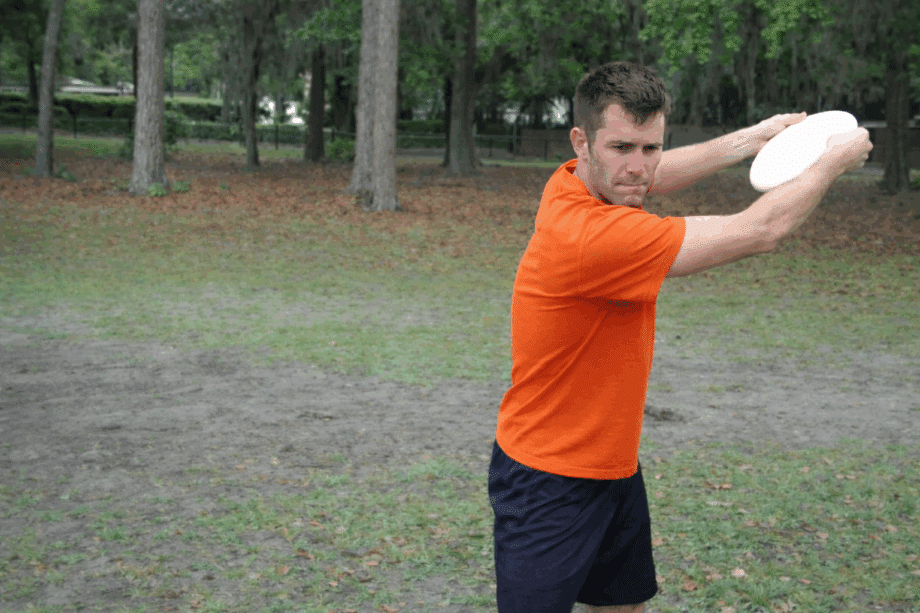 Use a backhand throw when:
- You want your most consistent distance and accuracy.
- The fairway is open or moderately wooded.
- You need a straight flight with a gentle finish.
Why it works: Backhand is the easiest throw for most players to learn and repeat, and it’s usually the best path to more distance.
Beginner tip
If your disc always fades hard left (for right-hand backhand), it’s often an arm-speed match issue—not “you doing it wrong.” Focus on a smooth release and choose beginner-friendly discs that want to fly straighter.
Related tutorial: Tutorial: Backhand Throw
Forehand / sidearm (the shortcut around corners)
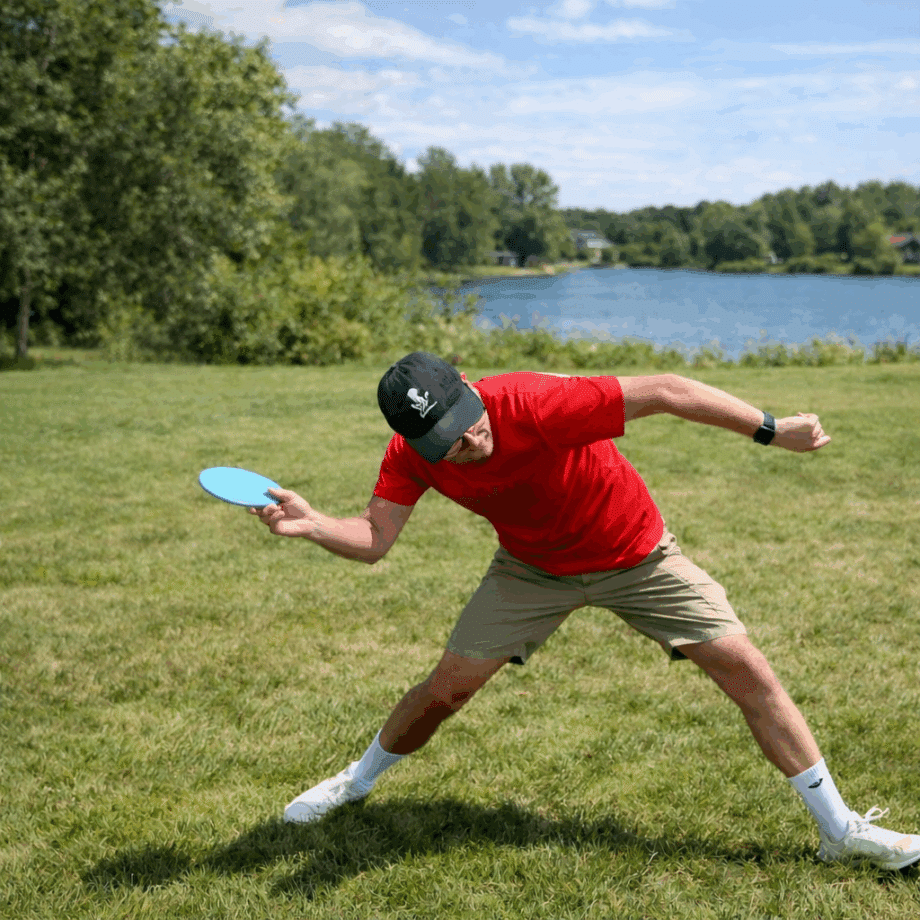 Use a forehand throw when:
- You need a shot that finishes hard to your throwing-hand side (RHFH typically finishes right).
- You have a low ceiling and need a flatter, faster line.
- You want a predictable skip at the end.
Why it works: Forehand is great for shaping lines—especially in scramble situations—without needing a big run-up or a full backhand swing.
Beginner tip
Keep it smooth. Most forehand issues come from trying to muscle the disc. A controlled flick is more accurate (and usually easier on your arm).
Related tutorial: Tutorial: Forehand Throw
Hammer throw (overhand / tomahawk-style)
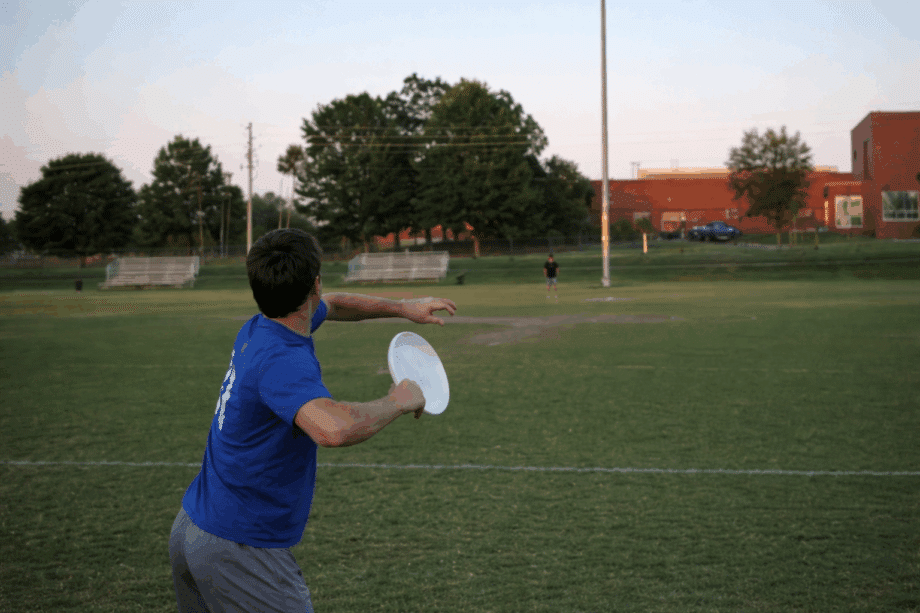 Some players call this the hammer throw. In disc golf, it’s commonly known as a tomahawk—an overhand throw where the disc rotates vertically and drops in steep.
Use a hammer throw when:
- You’re stuck behind trees and need to go up and over.
- You need a steep landing angle to stop near the basket.
- You’re scrambling and a normal line just isn’t available.
Why it works: Overhand throws can ignore obstacles that block normal backhand/forehand lines.
Beginner tip
Use overhands as “get out of trouble” shots first. They can be tough on the shoulder if you overuse them.
Related tutorial: Tutorial: Hammer Throw
Thumber (overhand)
The thumber is another overhand throw. It’s useful when you want an over-the-top escape line but the hammer/tomahawk finish doesn’t fit your landing zone.
Use a thumber when:
- You need to clear an obstacle and drop in quickly.
- You want a different pan/finish than a hammer throw.
Beginner tip
If your shoulder doesn’t like overhands, choose the smart play: pitch out, lay up, and take your par (or minimize damage).
Roller (when the ground is your fairway)
Use a roller when:
- The ceiling is too low for a normal air shot.
- You want extra distance on flat, short grass.
- You need to move left/right around a corner using ground play.
Why it works: A roller can keep traveling after it lands, which can be a huge advantage on the right terrain.
Beginner tip
Rollers are very ground-dependent. If the fairway is rocky, rooty, or sloped, a simple controlled air shot often scores better.
Approach shots (controlled upshots)
Use an approach shot when:
- You’re outside putting range and want an easy “parked” landing.
- You want to avoid big skips, rollaways, or long comeback putts.
- The smart play is placement, not power.
Why it works: Approach shots are where scores drop fast. A clean, controlled upshot turns bogeys into pars.
Beginner tip
When in doubt, choose the shot that lands the softest and straightest for your arm speed. Smooth beats strong.
Putting (scoring mode)
Use your putting stroke when:
- You’re inside your confident range and want a repeatable routine.
- You’re outside your range and the best play is a safe layup.
Why it works: Putting is the one skill you use on every hole. A simple routine and consistent release will save more strokes than any “hero shot.”
Beginner tip
Pick one putting style and stick with it for a few weeks. Confidence comes from repetition.
Related tutorial: Tutorial: Putting
How to choose the right disc golf throw (simple decision process)
- Do I need distance or placement?
- Is there a low ceiling or a big obstacle?
- Do I want the disc to finish left, finish right, or land straight?
- What’s the safest miss? (Short? Wide? Soft landing?)
If you’re new: default to a smooth backhand, a controlled approach, and a confident putt. Add forehand and overhand throws as your comfort grows.
Next steps: discs, practice, and beginner-friendly resources
- Browse discs and gear: Shop
- More beginner tips and skill-building: Improving Your Game