Your First 3 Discs: What to Buy First (and What to Skip)
If you’re new to disc golf, it’s easy to feel like you need a huge bag of discs to play “the right way.” You don’t. In fact, buying too many discs too early is one of the fastest ways to get overwhelmed, spend extra money, and slow down your learning.
This guide keeps it simple: the best first 3 discs for beginners, why they work, and what to skip until your form and control improve.
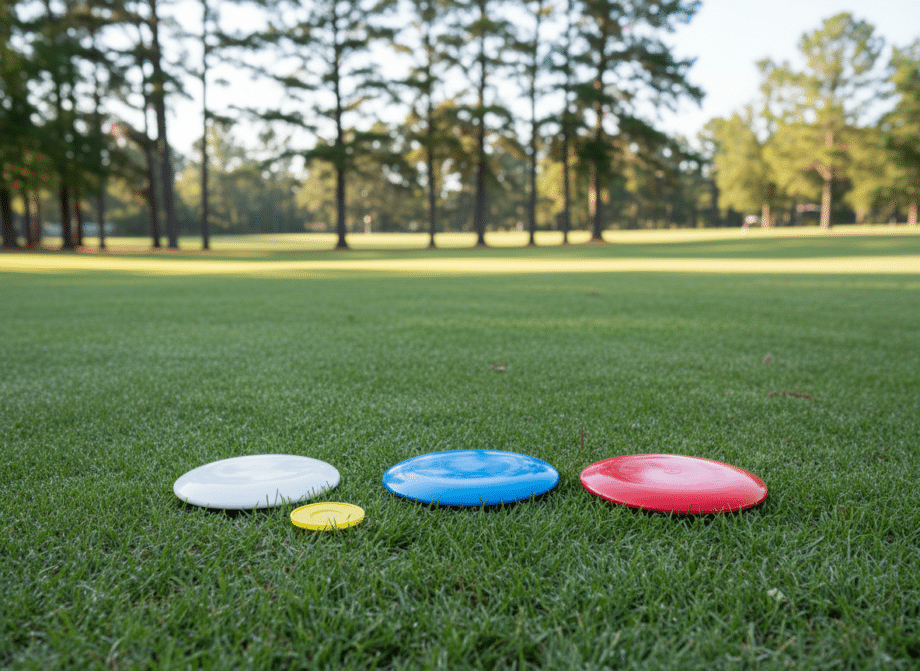
The Simple Beginner Formula: Putter + Midrange + Fairway Driver
With these three discs, you can cover almost every shot you’ll face on a typical course:
- Putter: putting + short approaches + easy straight throws
- Midrange: controlled straight shots + learning clean release
- Fairway driver: a little extra distance without losing control
Why this works
- Fewer discs = faster learning
- You’ll learn clean form and angle control
- You’ll lose fewer discs (and spend less replacing them)
Disc #1: A Putter (Your Most Important Disc)
If you only buy one disc to start, make it a putter. Putters teach touch, control, and clean release—and you’ll use it on every hole.
What to look for in a beginner putter
- Comfortable feel in your hand (most important)
- Neutral flight (not extremely overstable)
- Grippy plastic that feels confident in all weather
Beginner tip
Buy two of the same putter if you can. Putting improves faster with repetition.
Helpful internal link
Browse beginner-friendly putters here: Putters.
Disc #2: A Straight-Flying Midrange (Your “Teacher” Disc)
A midrange is the best disc for learning how discs actually fly. It’s slow enough to control, but fast enough to go surprisingly far with good technique.
What to look for in a beginner midrange
- Neutral to understable flight (tends to go straighter at lower arm speeds)
- Comfortable rim (midranges feel “clean” in the hand)
- Reliable glide (helps you get distance without forcing power)
Why beginners love midranges
If your midrange is flying wildly left or right, it’s usually giving you helpful feedback about your release angle and speed.
Helpful internal link
Browse midranges here: Midranges.
Disc #3: A Fairway Driver (Skip Distance Drivers for Now)
Most beginners buy a high-speed distance driver too early. It feels like it should go farther—but if your arm speed isn’t there yet, it often fades hard, skips into rough, and becomes a “disc-losing machine.”
A fairway driver is the sweet spot: more distance than a midrange, but still controllable.
What to look for in a beginner fairway driver
- Moderate speed (fairway/control driver range)
- Easy-to-throw flight (not extremely overstable)
- Comfortable grip that doesn’t feel too wide
Helpful internal link
Browse fairway drivers here: Fairway Drivers.
What to Skip (At First) and Why
You’ll probably want these eventually—but they’re not the best “first purchase” for most beginners.
Skip #1: High-speed distance drivers
- Harder to throw correctly
- More likely to fade early and go left (RHBH)
- More likely to skip/roll into trouble
Skip #2: Extremely overstable discs
- They can mask form issues
- They often finish hard left (RHBH) and reduce your “straight” flight window
Skip #3: Specialty discs (rollers, ultra-flippy, utility discs)
- Fun later, but confusing early
- Better once you can control angles consistently
Beginner Buying Tips That Save Money
Disc golf can be affordable if you buy smart early.
Simple money-saving habits
- Buy fewer discs and learn them well
- Choose bright colors so you lose fewer discs
- Write your name and number on the underside
- Consider a starter set if you want a simple, ready-to-go setup
Starter set option
If you want a simple bundle that covers the basics, start here: Starter Sets.
Quick FAQ: First Discs for Beginners
Should I buy a driver first?
Most beginners do better starting with a putter and midrange. Add a fairway driver once you can throw those discs straight and consistently.
How many discs do I need to start?
Three is plenty. You can play full rounds with a putter and midrange, and the fairway driver adds extra distance when you’re ready.
What weight should I buy?
Many beginners prefer slightly lighter discs because they’re easier to get up to speed. If you want, tell me your typical throwing distance and I can suggest a good weight range to start with.
Final Thoughts: Keep It Simple and You’ll Improve Faster
Your first discs should make the game easier, not more complicated. Start with a putter, a straight midrange, and a fairway driver you can control. Skip the high-speed stuff for now, and you’ll learn faster, lose fewer discs, and have more fun.