Dogs on the Course: Leashes, Etiquette, and Keeping Everyone Safe
Disc golf is more fun with friends—and for a lot of us, that includes our dogs. A well-behaved dog can be a great course buddy. But a loose, reactive, or distracted dog can quickly turn a relaxing round into a stressful (or unsafe) situation for other players, park users, and wildlife.
This beginner-friendly guide covers disc golf dog etiquette, when to use a leash, how to keep pace of play, and simple habits that keep everyone safe.
First: Check the Course and Park Rules
Before you bring a dog, confirm what the park requires. Many courses are in public parks with posted rules.
Quick rule check
- Leash required? (Many parks require leashes at all times.)
- Off-leash allowed? If yes, it may still require voice control.
- Waste rules (bag it and pack it out—always).
- Wildlife or protected areas (some parks are strict for a reason).
Leashes: The Safest Default
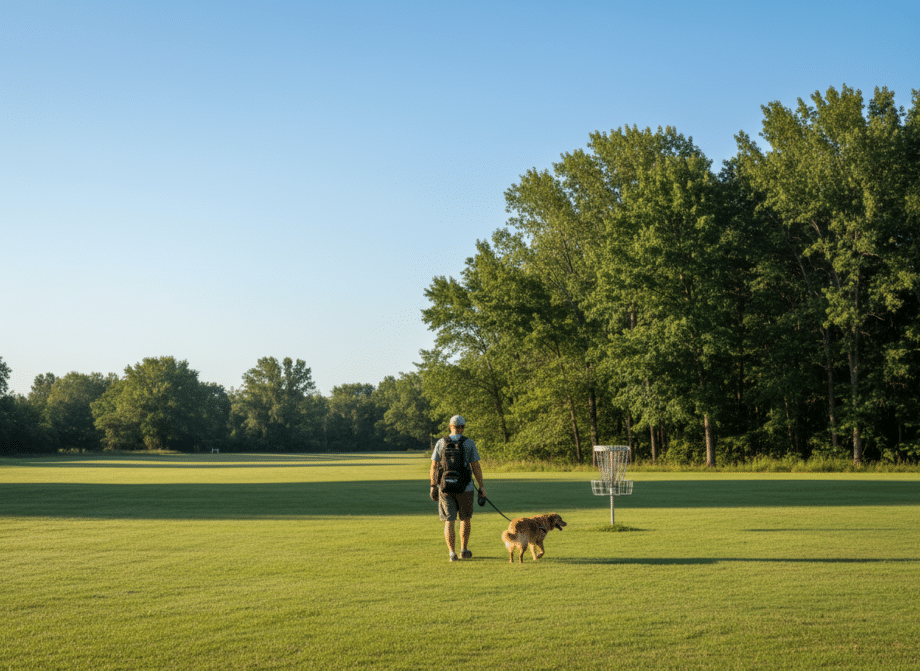
Even if your dog is friendly, a leash is usually the safest choice on a disc golf course. Courses have flying discs, blind fairways, kids, runners, bikes, and other dogs.
Why leashes matter
- Prevents surprise interactions with other dogs or people
- Reduces the chance of getting hit by a disc on a blind hole
- Keeps your dog out of poison ivy, stickers, thorns, or water hazards
- Protects wildlife (especially birds and small animals)
Best leash setup for disc golf
- 6-foot leash (easy to control, not tripping everyone)
- Harness instead of collar (safer if your dog pulls)
- Hands-free waist leash can work if your dog doesn’t pull and you can still throw safely
Disc Golf Dog Etiquette (What Other Players Appreciate)
You don’t need a perfect dog—just a respectful plan.
DO
- Ask your card first: “You good with a dog on the card?”
- Keep your dog close on tee pads and near baskets
- Step off the tee pad so your dog isn’t in anyone’s throwing space
- Carry water for your dog (especially in summer)
- Pick up waste immediately and pack it out
DON’T
- Don’t let your dog run up to other players (even friendly dogs can scare people)
- Don’t let your dog bark through putts (it’s distracting and slows play)
- Don’t let your dog wander ahead onto the next fairway or tee
- Don’t assume everyone loves dogs (some people are allergic or afraid)
Keeping Everyone Safe Around Flying Discs
Discs can move fast and skip unexpectedly. Dogs don’t always understand “line of fire.”
Safety habits that work
- Leash up on blind holes and near other groups
- Keep your dog behind the thrower during drives and approaches
- Don’t allow chasing discs (it’s dangerous and can ruin discs)
- Watch for other fairways: your dog should never wander into another hole’s landing zone
If your dog chases discs
That’s a training issue—not a “they’re just excited” issue. Until it’s solved, keep the dog leashed and consider leaving them home on busy days.
Pace of Play: Don’t Slow the Course Down
Most frustration happens when a dog causes delays—sniffing forever, pulling into rough, or needing constant correction.
How to keep pace
- Bring treats for quick focus and recall
- Keep the leash untangled (avoid wrapping around tee signs/benches)
- Plan water breaks at natural pauses (not on the tee pad)
- If your dog needs a long sniff break, step aside and let faster groups play through
Heat, Terrain, and Paw Safety
Disc golf often means long walks, rough terrain, and hot surfaces. Dogs can overheat faster than people.
Signs your dog needs a break
- Heavy panting that doesn’t settle
- Lagging behind or lying down
- Excess drooling
- Seeking shade constantly
Simple prevention
- Bring extra water and offer it often
- Avoid peak heat (early morning or later evening is safer)
- Watch paws on rocky or hot surfaces
- Check for ticks after wooded rounds
Waste and Leave No Trace (Dog Edition)
Dog waste left on a course is one of the quickest ways to create complaints and get parks annoyed with disc golfers.
Best practice
- Carry waste bags (bring more than you think you need)
- Pack it out if there’s no trash can
- Don’t leave bagged waste on the ground “to grab later” (it often gets forgotten)
When You Should Leave Your Dog at Home
Sometimes the responsible choice is a dog-free round—especially on busy days.
Consider leaving them home if
- Your dog is reactive to people or other dogs
- Your dog barks constantly or won’t settle
- Your dog chases discs
- The course is crowded (tournaments, league nights, peak hours)
- It’s extremely hot or there’s limited water/shade
Helpful Links (Divergent Discs)
If you’re building a comfortable “course day” setup, these pages can help:
- Disc Golf Bags (carry water, towel, and essentials)
- Mini Markers (handy for organized rounds and marking lies)
- Starter Sets (simple setup for new players)
Final Thoughts
Dogs can absolutely belong on the course—when they’re managed responsibly. A leash-first mindset, respect for other players, and a little preparation go a long way toward keeping disc golf fun and safe for everyone.