How to Volunteer and Help Maintain Your Local Disc Golf Course
One of the coolest things about disc golf is that most courses exist because local players care. Volunteers build tee pads, empty trash, trim branches, and keep fairways playable—often with little or no funding.
If you’ve ever thought, “I should help out,” this guide will show you exactly how to volunteer, what course maintenance usually involves, what tools to bring, and how to make a real impact (even if you only have an hour).
Why Course Volunteering Matters
Course maintenance isn’t just about making things look nice. It helps:
- Keep the course safe (less broken glass, fewer trip hazards, clearer walk paths)
- Protect the environment (erosion control, trail protection, responsible trimming)
- Improve playability (fairways stay fair, rough stays findable)
- Keep courses open (parks notice when a community takes care of the space)
Step 1: Find Out Who Runs the Course
Most courses are maintained by a local disc golf club, a parks department, or a small group of dedicated players.
Easy ways to find the right contact
- Check the main kiosk or bulletin board near hole 1 (often has club info)
- Search Facebook for “[Your City] Disc Golf” or “[Course Name] Disc Golf”
- Ask a regular at the course: “Who organizes work days here?”
Beginner-friendly tip
If you’re nervous about reaching out, keep it simple: “Hey! I’d love to help with course maintenance. Do you have work days, or is there something I can do on my own?”
Step 2: Start Small (The “One Hour” Volunteer Plan)
You don’t need to commit to a full work day to help. Here are high-impact tasks you can do in about an hour.
Quick volunteer tasks
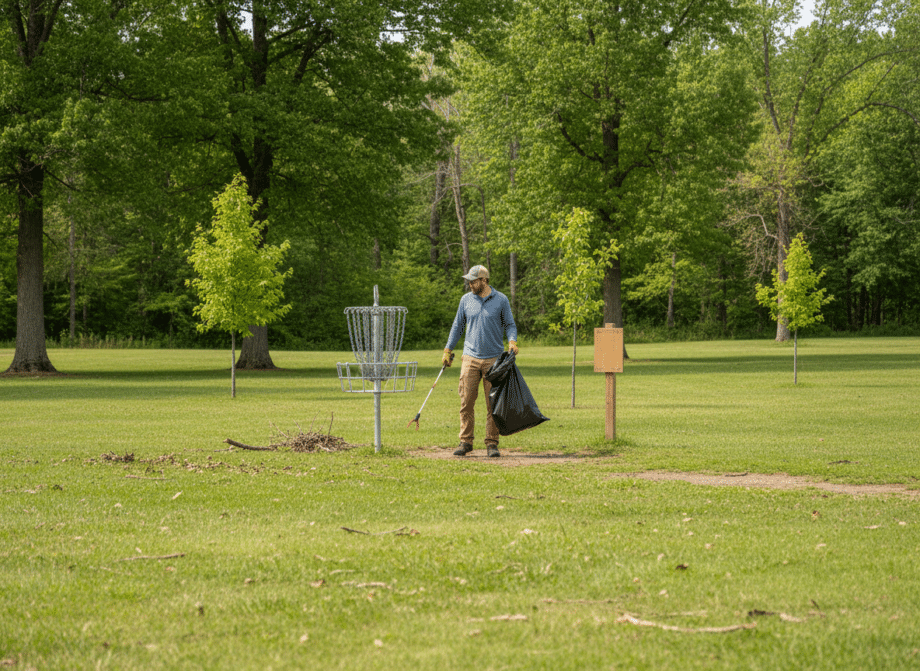
- Trash sweep: bring a bag and gloves and walk 3–6 holes picking up litter
- Lost-and-found tidy: gather abandoned bottles/cans and clear tee pad edges
- Brush and stick removal: move small branches off fairways and paths
- Tee pad cleanup: sweep sand/dirt off pads (especially after rain)
- Report issues: take photos of damaged baskets/signs and share with the club
Step 3: Join a Work Day (What to Expect)
Work days are usually relaxed and social. You’ll often meet other players and learn a lot about the course.
Typical work day projects
- Trimming overgrowth along fairways and trails
- Spreading wood chips or gravel in muddy areas
- Installing or repairing tee signs
- Clearing storm debris
- Building or improving walk paths
How long does it take?
Many work days run 2–4 hours, but it’s usually fine to show up for part of it. Just communicate what you can do.
What to Bring (So You’re Useful and Safe)
You don’t need fancy equipment. The goal is to show up prepared and not get hurt.
Basic volunteer kit
- Work gloves
- Closed-toe shoes (boots if it’s muddy)
- Water and a snack
- Bug spray and sunscreen (seasonal)
- Trash bags (contractor bags are great)
If you have tools (ask first)
- Hand pruners / loppers
- Rake or shovel
- Hand saw
- Battery-powered blower (great for tee pads)
Important
For bigger tools (chainsaws, weed trimmers), only use them if you’re experienced and the organizer approves. Safety and liability matter.
Course Maintenance Etiquette (Do This the Right Way)
Good intentions can still cause problems if you trim or build without coordination. Keep it simple:
DO
- Ask before cutting trees/branches or changing the course
- Focus on safety: broken glass, trip hazards, sharp debris
- Follow park rules and posted guidelines
- Take before/after photos (helps clubs show progress)
DON’T
- Don’t remove live branches to “improve your favorite line”
- Don’t dig, pour concrete, or install anything without permission
- Don’t dump yard waste or trash in the woods (even if it’s “natural”)
How to Help Even If You’re Brand New
You don’t need to be a great player to be a great volunteer.
Beginner-friendly ways to contribute
- Be the “trash sweep” person (huge impact)
- Help spot and mark problem areas (muddy spots, broken signage)
- Bring extra bags, gloves, or water for the group
- Share work day posts to help recruit more volunteers
How to Keep It Going (Without Burning Out)
The easiest way to stay involved is to make it light and consistent.
Simple routines that work
- Adopt-a-hole: you maintain 1–2 holes once a month
- One-bag cleanup: pick up one bag of trash every few rounds
- Seasonal check-ins: spring cleanup, mid-summer trim, fall debris sweep
Final Thoughts
Volunteering is one of the best ways to support disc golf. You’ll meet good people, learn your course better, and help keep the sport welcoming for everyone.