Disc Flight Numbers: What Does “Glide” Mean?
Glide is a disc’s ability to stay in the air and carry forward with minimal effort. If you’ve ever thrown a disc that just keeps floating down the fairway, that’s glide doing its job.
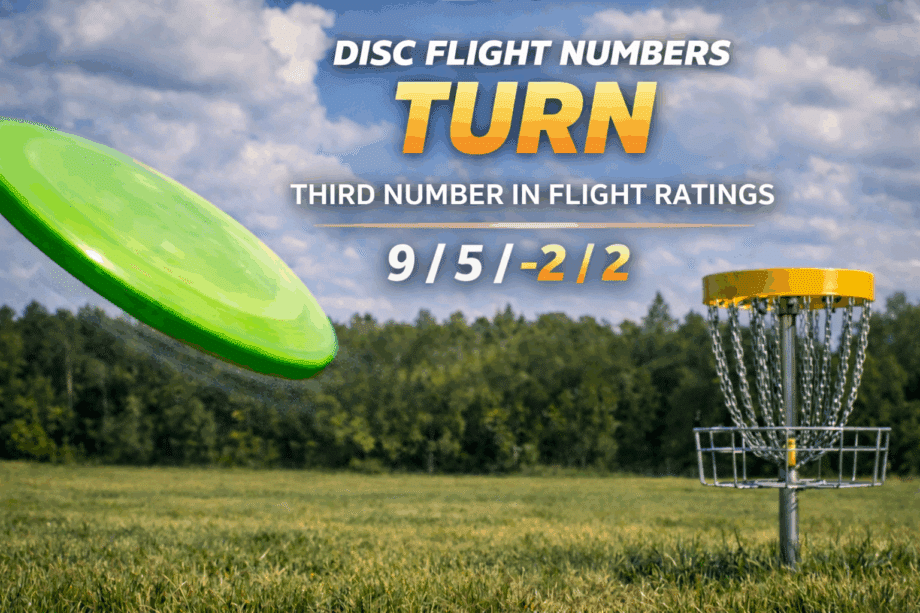
On most discs, glide is the second flight number (example: 8 / 6 / -2 / 1 → the 6 is glide). Glide ratings usually range from about 1 to 7.
Quick Definition: High Glide vs. Low Glide
High Glide (Typically 5–7)
A higher-glide disc tends to:
- Carry farther with the same throwing effort
- Feel like it “wants to stay up”
- Be great for beginners and slower arm speeds
- Be a bit more wind-sensitive, especially in headwinds
Great for: easy distance, smooth fairway shots, learning clean form.
Low Glide (Typically 1–4)
A lower-glide disc tends to:
- Drop sooner and land more predictably
- Feel more controlled for placement shots
- Be helpful in wind (depending on the disc’s stability)
- Not “float” as much when you miss your angle
Great for: windy days, controlled approaches, landing in a specific zone.
Why Glide Matters (Especially for Beginners)
Glide is one of the biggest reasons some discs feel “easy” and others feel like bricks.
If you’re newer to disc golf (or you’re throwing at a casual pace), higher glide can help you get a full flight without needing perfect technique or max power. That usually means:
- More distance without throwing harder
- Smoother, straighter flights
- More confidence (and more fun)
How Glide Changes Real-World Disc Flight
Glide Affects “Hang Time”
More glide generally means more time in the air, which can translate to more forward carry. This is why glide is often a big deal for disc golf beginners looking for easy distance.
Glide Helps a Disc Hold Its Line Longer
Glide isn’t only about distance. A glidey disc can keep pushing forward on a hyzer, flat, or anhyzer angle longer before it fades out.
Glide Can Amplify Wind Effects
In a headwind, a higher-glide disc may lift more, turn more, or drift off line. If it’s windy, you may prefer a disc with lower glide (or a more stable option) for added predictability.
Common Misunderstandings About Glide
“More Glide Always Means More Distance”
Not always. Glide can add distance, but if the disc is too fast or too overstable for your arm speed, it can still fade out early. Glide works best when the disc is a good match for your throwing speed and form.
“Glide Is Only for Drivers”
Glide matters on every disc type—putters, midranges, and drivers. A glidey putter can float toward the basket on longer putts, while a low-glide approach disc can sit down more reliably near the pin.
How to Choose the Right Glide for Your Game
If Your Throws Drop Early…
- Try a disc with more glide
- Consider a beginner-friendly option designed for slower arm speeds
If Your Approaches Float Past the Basket…
- Try a disc with less glide for more predictable landings
- Use smoother, lower-power throws and focus on placement
If It’s Windy…
- Consider lower glide and/or a more stable disc
- Keep the disc nose-down and throw with a controlled angle
Beginner-Friendly Disc Types to Explore
If you’re building a bag for easy distance and straighter flights, it helps to start with discs that match your arm speed and give you usable glide.
Putters & Approach Discs
- Shop Divergent Discs (browse beginner-friendly options)
Midranges
- Explore midrange discs (great for learning clean, straight flights)
Fairway Drivers
Final Takeaway: Glide = Easy Carry
Glide is basically a disc’s “hang time.” If you want a disc that feels effortless and carries forward, look for higher glide. If you want something that lands more predictably and doesn’t float forever, go lower glide.