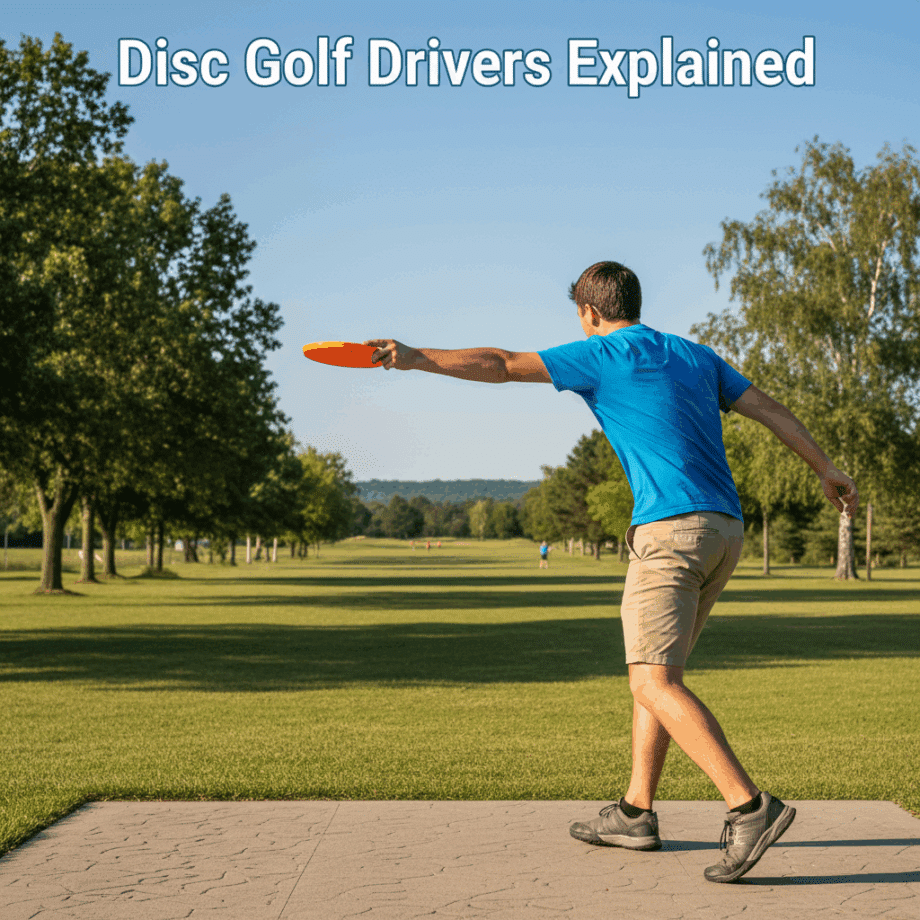
Choosing the right disc golf driver can make a big difference in your distance and control on the course. Drivers are designed to fly farther than putters and midrange discs, but not every driver is right for every player. This guide will help you understand the main types of disc golf drivers, when to use them, and how to choose the best ones for your skill level.
What Is a Disc Golf Driver?
A driver is a disc designed for longer throws. Compared to putters and midrange discs, drivers usually have:
- Sharper rims for more speed through the air
- Thinner profiles to cut through wind
- Higher speed ratings (often 7–14)
However, faster does not always mean better. Many beginners and casual players actually throw farther and straighter with slower, more forgiving drivers designed for lower arm speeds.
Types of Disc Golf Drivers
Fairway (Control) Drivers
Fairway or control drivers are a step up from midrange discs. They offer more distance while still being easier to control than high-speed distance drivers.
Typical Speed Range: 6–9
Best For:
- Beginners and casual players
- Accurate tee shots on shorter or wooded holes
- Controlled fairway shots where placement matters
Benefits:
- Easier to control than high-speed drivers
- More forgiving for slower arm speeds
- Great for learning proper throwing form
Examples of beginner-friendly fairway drivers include:
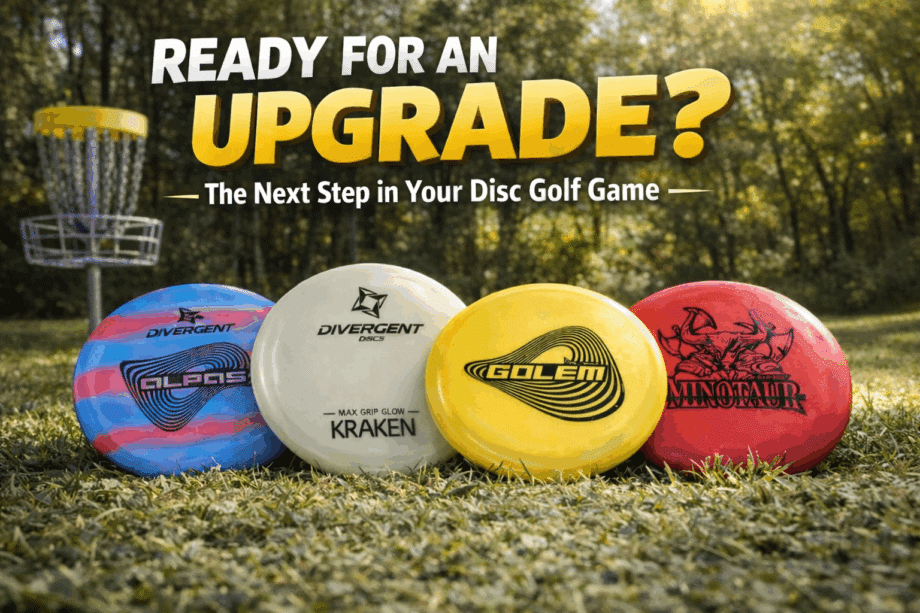
- Kraken Fairway Driver – Straight and dependable for most players.
- Minotaur Fairway Driver – More overstable for windy days and reliable fades.
- Tiyanak Fairway Driver – Very beginner-friendly and easy to throw.
Distance Drivers
Distance drivers are built for maximum distance. They can fly very far, but they require more arm speed and cleaner form to perform correctly.
Typical Speed Range: 10 and above
Best For:
- Intermediate and advanced players
- Open holes where maximum distance is needed
- Players who already throw fairway drivers confidently
Benefits:
- Potential for the longest throws
- Useful for long par 4s and par 5s
- Can shape a variety of distance lines with practice
Examples of beginner-friendly distance drivers include:
- Basilisk Distance Driver – Designed to help slower arms get a full, long flight.
- Lawin Distance Driver – More overstable for windy conditions and stronger arms.
Understanding Driver Flight Numbers
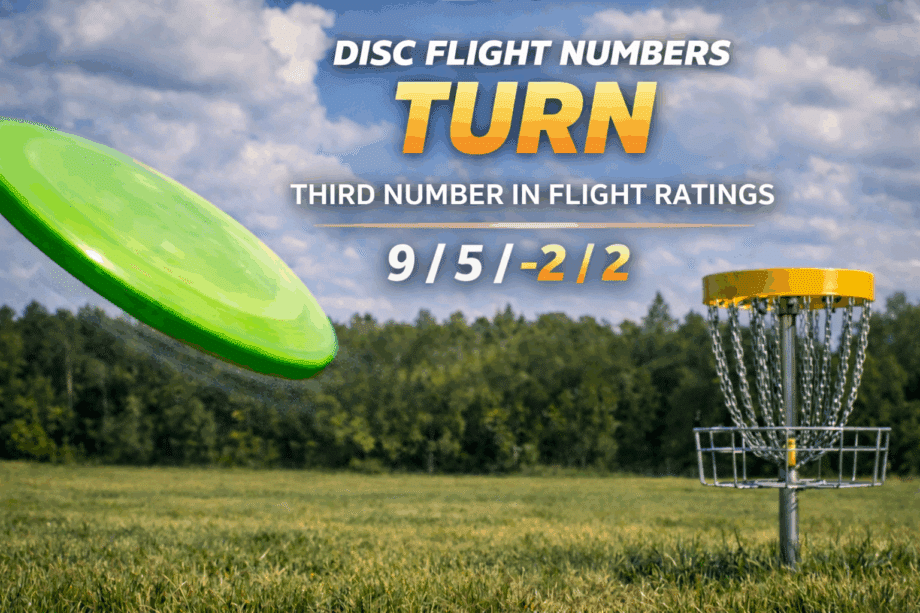
Most drivers use four flight numbers: Speed, Glide, Turn, and Fade. These numbers give you a quick idea of how the disc is intended to fly.
- Speed: How fast you need to throw the disc to get its full flight.
- Glide: How well the disc stays in the air.
- Turn: How much the disc moves right (for a right-hand backhand throw) early in the flight.
- Fade: How much the disc finishes left (for a right-hand backhand throw) at the end of the flight.
Beginners usually do best with drivers that have moderate speed, good glide, gentle turn, and a soft fade. These features help the disc fly straighter with less effort.
How to Choose the Right Driver
For Beginners
- Start with fairway drivers instead of the fastest distance drivers.
- Look for discs that are described as “beginner-friendly” or “easy to throw.”
- Choose lighter weights if you have a slower arm speed.
Good Starting Options:
For Improving Players
- Add a distance driver once you are comfortable with fairway drivers.
- Use more overstable drivers for windy days and reliable fades.
- Experiment with different plastics to find the feel you like best.
Good Next-Step Options:
When Should You Throw a Driver?
Good Times to Use a Driver:
- On longer holes where you need extra distance off the tee.
- On open fairways with fewer trees and obstacles.
- In tailwinds, where extra glide can help the disc carry farther.
Times to Consider a Midrange or Putter Instead:
- On short holes where accuracy matters more than distance.
- On tight wooded fairways with narrow gaps.
- When you need a very controlled landing near the basket.
For those situations, a midrange like the Leviathan Midrange or a putter like the Narwhal Putter may be a better choice.
Conclusion
Understanding disc golf drivers—what they are, the different types, and when to throw them—will help you make smarter choices on the course.
Whether you are a brand-new player or a casual golfer looking to improve, choosing the right driver for your arm speed and the course conditions can lead to longer, more controlled throws.
As you gain experience, experiment with different fairway and distance drivers to find the combination that feels best in your hand and flies the way you expect.
The right driver can turn a difficult hole into a confident, enjoyable shot.