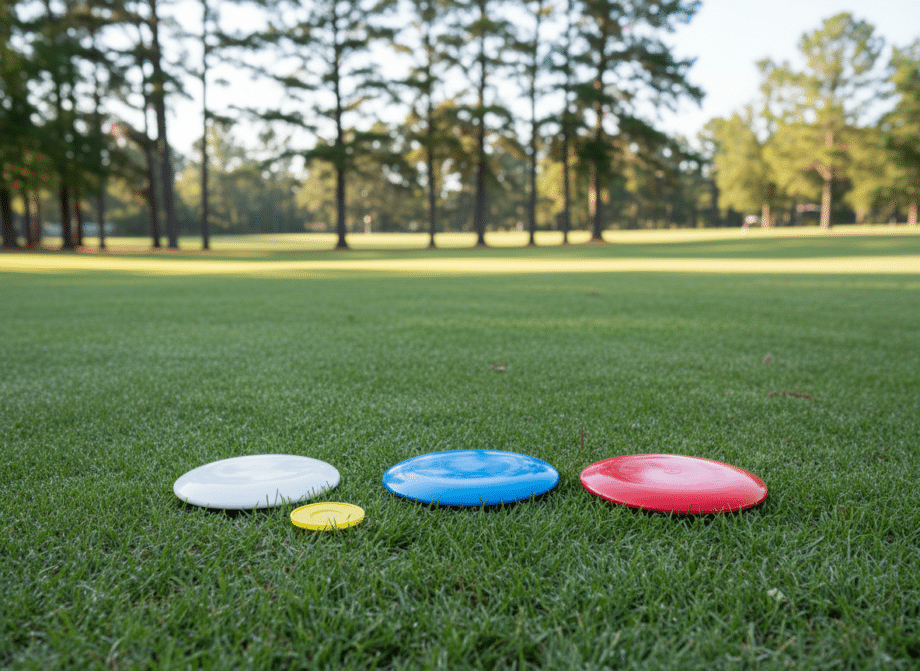
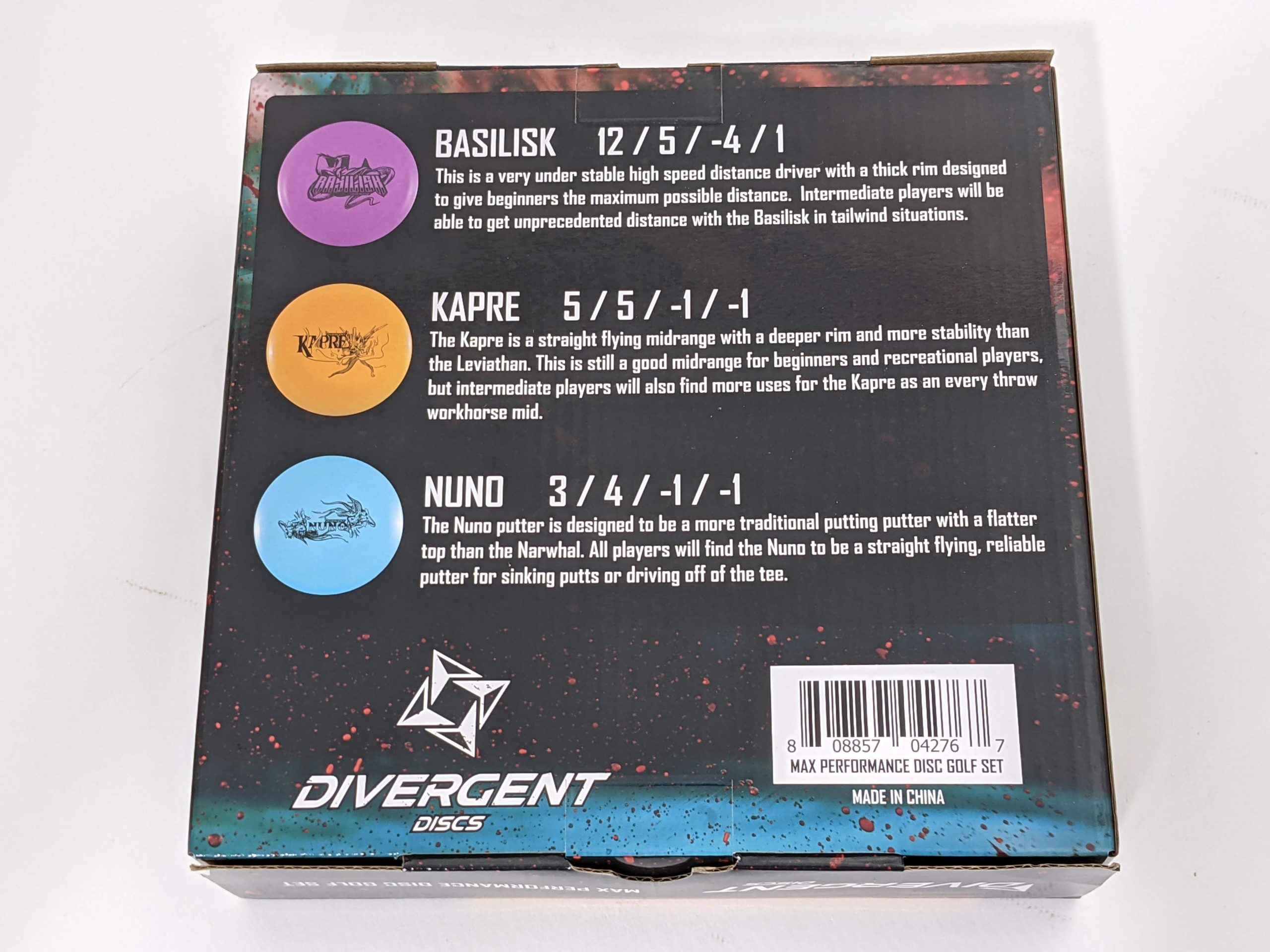
If you’ve ever picked up a disc golf disc and noticed a four-number combo like 8 | 5 | –2 | 1 stamped on the front, you’re looking at something called a Flight Ratings System. It’s not a code—it’s a guide to how that disc is designed to fly when thrown flat and level. That part’s important. If you throw a disc on an anhyzer or hyzer angle, or with a lot of torque, those numbers become more of a suggestion than a rule.
Still, understanding what these disc golf Frisbee numbers mean can help you choose discs that match your skill level and throwing style—especially if you’re throwing Divergent Discs, which are designed to make those numbers actually work for recreational players.
Speed (1 to 14)
Speed is the first number, and it ranges from 1 (very slow putters) to 14 (ultra-fast distance drivers). This number tells you how aerodynamic the disc is and how much power it takes to get the disc flying as intended.
A lower speed disc—like the Narwhal (Speed 3)—requires less power to fly straight and is easier to control. A disc like the Lawin, rated at Speed 12, is one of the fastest in the Divergent lineup. It’s built for players starting to push the 300 ft distance mark who want maximum carry with a strong finish.
It’s worth noting that Divergent also makes a disc like the Basilisk (Speed 12), which is technically a high-speed disc—but it’s engineered specifically for low-power throwers to still get a full S-curve flight path. So, it’s a bit of an exception to the typical disc golf numbers meaning.
Glide (1 to 7)
Glide is how much lift the disc generates while in flight. The higher the number, the longer the disc will stay in the air—especially on a calm, clean throw.
If you’re trying to get every bit of distance out of a controlled throw, you want something with high glide. The Leviathan (Glide 5) is a great example. It floats down the fairway with ease and is a go-to midrange for newer players who need help keeping the disc aloft.
Discs with lower glide—like the Wyrm—are designed to fight the air and dump out quickly. That can be useful when you don’t want a long flight, such as in tight landing zones or extreme wind.
Turn (+1 to –5)
Turn tells you how much a disc veers to the right during the high-speed portion of its flight (for right-handed, backhand throws). A disc with a rating of –5 will flip or “turn over” significantly, while a +1 disc will hold its line or even resist turning altogether.
If you’re a beginner who hasn’t yet developed high arm speed, a disc with a lot of turn can help you get more distance with less effort. The Basilisk (Turn –4) is a perfect example—it turns early and glides out, giving that S-curve feel without requiring a cannon arm.
At the other end, discs like the Minotaur are very torque-resistant and won’t turn much at all. That makes them ideal for forehand shots, windy conditions, or when you absolutely need a disc to hold a hyzer line.
Fade (0 to 5)
Fade is how much the disc hooks left at the end of its flight (for RHBH throws). A 0 fade means the disc finishes straight, while a 5 means it dumps hard left when it loses speed.
Discs like the Kapre offer a moderate fade—just enough to give you predictable finishes without dramatic hooks. But when you want something to finish with a bang—skip shots, spike hyzers, hard doglegs—then you go for something like the Wyrm.
The Wyrm isn’t pretending to be anything it’s not. It’s a utility disc with hard fade, period. You’re not throwing it for distance—you’re throwing it for control, placement, or when you need a disc to dump hard and stick the landing. It’s great for extreme hyzers, forced turnovers that flex back, or low-skip shots with minimal ground play thanks to its StayPut plastic.

How Plastics Affect Flight Numbers
Here’s something most beginners don’t realize: the same disc mold can fly differently depending on the plastic it’s made from.
At Divergent Discs, MaxGrip is our go-to blend for grippy, beginner-friendly performance. It gives you consistent flights and a comfortable feel in all weather.
But if you compare that to MaxLife plastic, you’ll notice a difference. MaxLife is more durable and tends to be more stable, with less turn and more fade. It’s also flatter and doesn’t dome up like MaxGrip, which gives it a cleaner release and helps it handle more torque. Players looking for a more premium or wind-resistant version of their favorite disc—like a Kraken or Lawin—often prefer MaxLife for those reasons.
StayPut plastic, like in the Golem or Alpas, softens the disc’s flight a bit and is best suited for approaches where you want minimal ground action.
Putting It All Together
When you look at a disc’s numbers—Speed | Glide | Turn | Fade—remember:
- They assume a flat, level throw.
- The real-world results vary based on how you throw, what angle you release, and even the plastic type.
That’s why one disc can behave differently for two different players—and why experimenting is so important.
Start with discs that match your arm speed and goals. If you’re just starting out, grab a Leviathan, Kraken, or Narwhal and build from there. These are tuned to help you learn clean mechanics while still getting great flights.
Final Word
The disc golf numbers meaning isn’t ultra complicated—it’s a tool. Understanding what the numbers mean on a disc golf disc gives you an edge in selecting the right discs for your style, power, and situation.
And if you’re throwing Divergent Discs, you’re already making smarter disc choices. They’re built to fly well for real players—not just the ones throwing 500+ feet on YouTube.